


Observers on the Hale Telescope: March 11, 2023
Heather Knutson and Shreyas Vissapragada
(California Institute of Technology)
Lower Neptune Desert: Decades of planetary discovery have revealed a dearth of Neptune-mass planets with short period orbits. This void of planets, termed the "Neptune Desert," may stem from the severe high energy radiation their host stars expose them to and catastrophic outflows that result. Using the Wide-field Infrared Camera, Knutson and Vissapragada are undertaking a survey of planetary mass loss in the lower part of the "Neptune Desert." This survey will test the hypothosis that efficient outflows drive intense atmospheric loss for close-in Neptune-mass planets. |
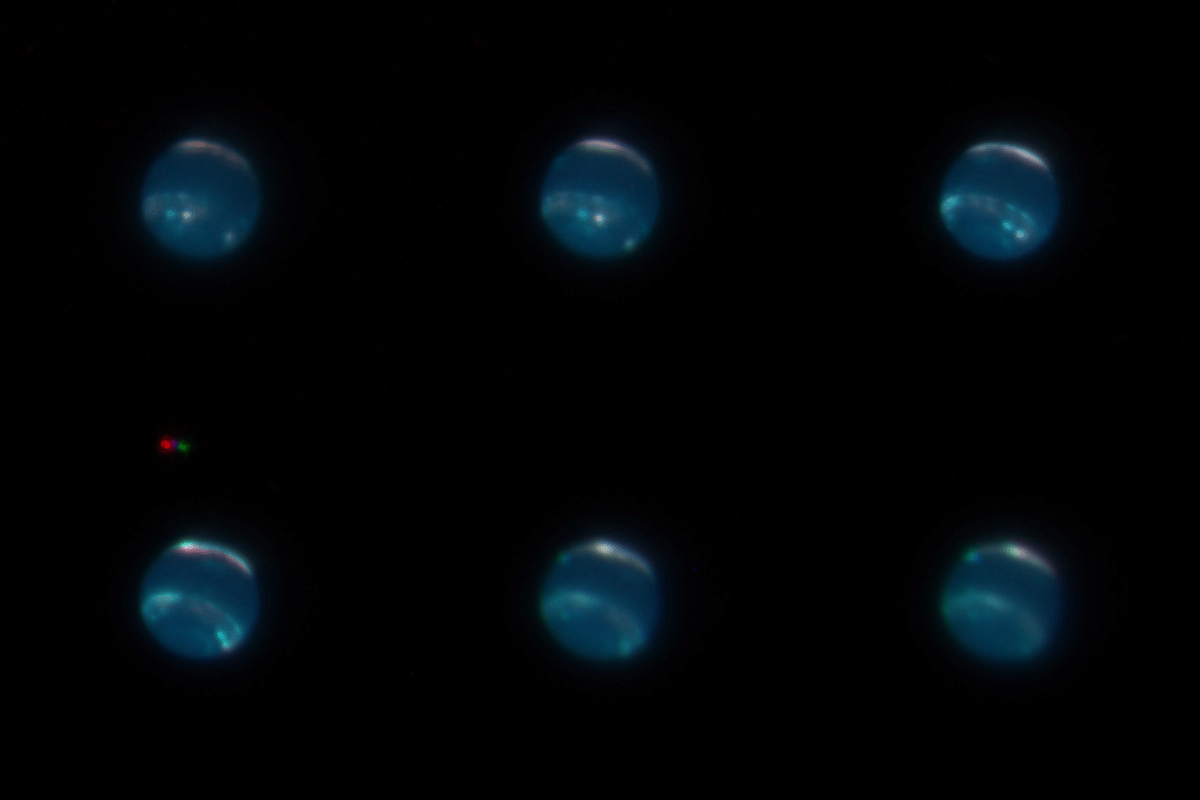 This sequence of images was obtained in 2006 using the adaptive optics system on the Hale Telescope. Unlike the planets of similar mass Knutson and Vissapragada are studying, Neptune is far from the Sun and has retained a thick atmosphere of mostly hydrogen with smaller amounts of helium and methane. You can see Neptune's satellite Triton passby in several of the frames. (JPL/Caltech) |

