|
1
|
|
|
2
|
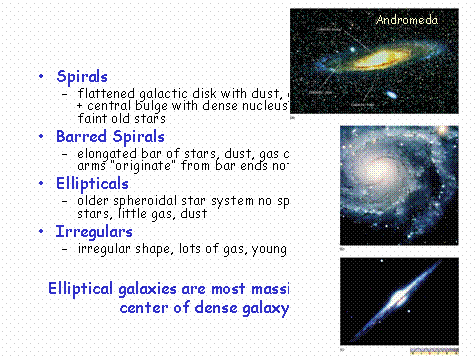
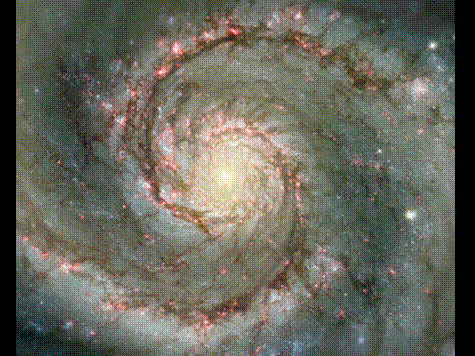
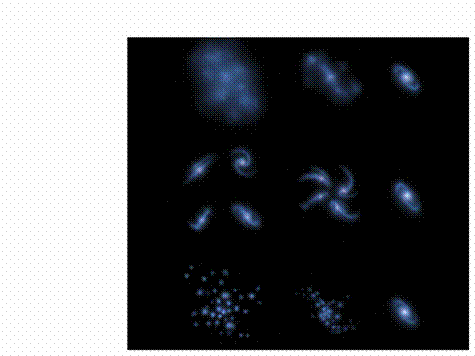
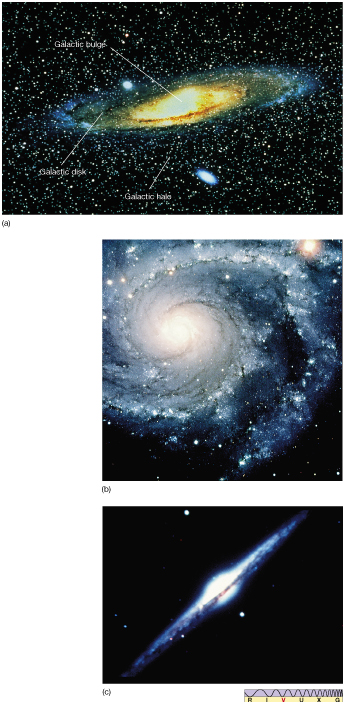
- Spirals
- flattened galactic disk with dust, gas, stars (spiral arms) + central
bulge with dense nucleus + extended halo of faint old stars
- Barred Spirals
- elongated bar of stars, dust, gas crosses center; spiral arms
“originate” from bar ends not bulge
- Ellipticals
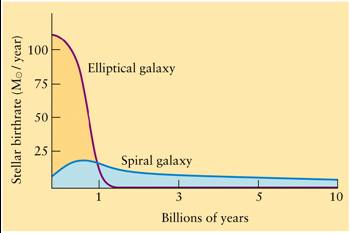
- older spheroidal star system no spiral arms, no young stars, little
gas, dust
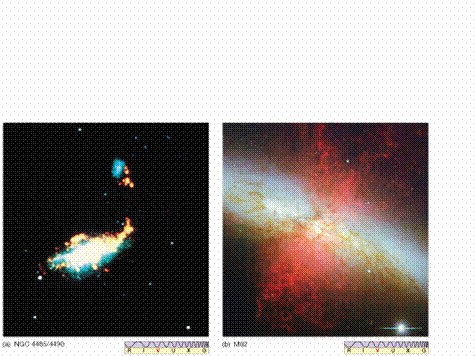
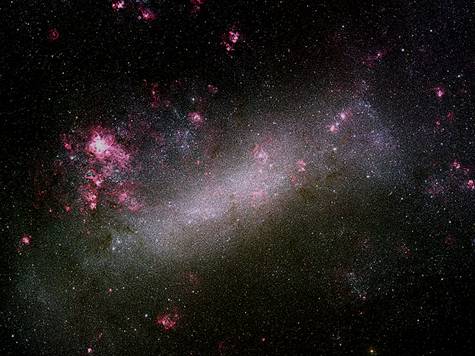
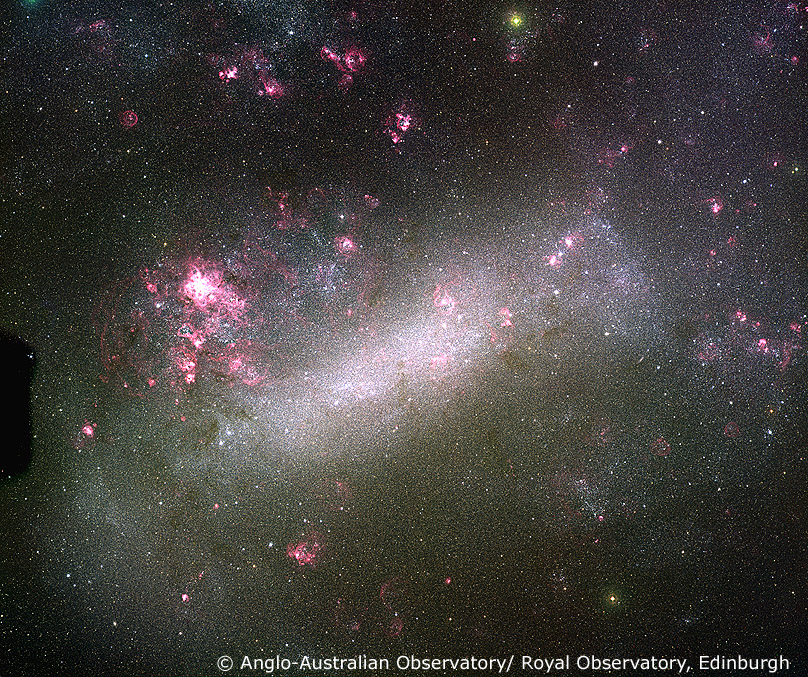
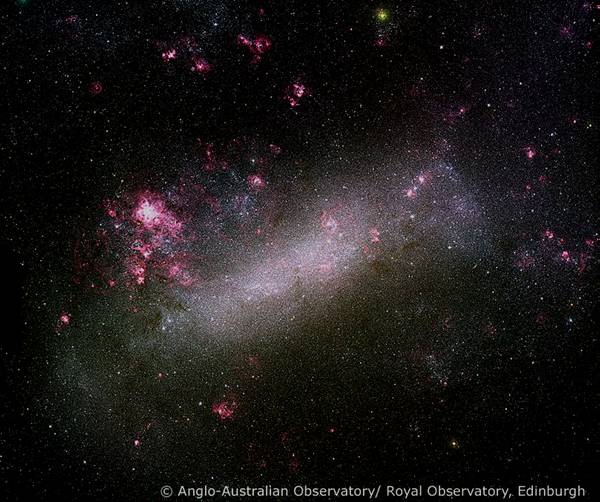
- Irregulars
- irregular shape, lots of gas, young blue stars
- Elliptical galaxies are most massive – often seen at
- center of dense galaxy clusters
|
|
3
|
- tightness of spiral pattern correlated with bulge size
- arms more knotty Sa ®
Sc
- i/s gas (21 cm (H) & molecular line radiation) increases Sa ® Sc
- A & G stars in disk ® whitish color
- new O & B stars b(+ nebulae) in arms ® bluish color
- Barred spirals – SBa ®
SBc (massive dark matter halo ® no bar?)
|
|
4
|
|
|
5
|
- E0 = most circular ®
E7 = most elongated
- orientation could affect shape!
- giant ellipticals –few x mega parsec diameter, > 1012 stars
- dwarf ellipticals – 1 kpc diameter, £ 106 stars
- (our Galaxy d ~ 50 kpc)
- little i/s material, only old red, low mass stars (like halo)
|
|
6
|
- Irr I – misshapen spirals
- Irr II – filamentary, “explosive”
|
|
7
|
|
|
8
|
|
|
9
|
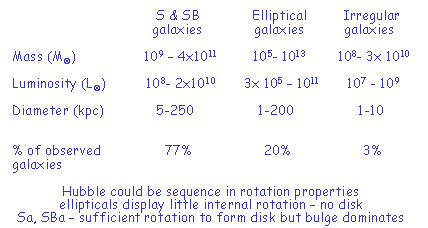
- S &
SB Elliptical Irregular
-
galaxies
galaxies galaxies
- Mass (M¤) 109 – 4x10¹¹ 105- 1013 108- 3x 10¹⁰
- Luminosity (L¤) 108-
2x10¹⁰ 3x 10⁵
– 1011 107
- 109
- Diameter (kpc)
5-250
1-200 1-10
- % of observed
77%
20% 3%
- galaxies
- Hubble could be sequence in rotation properties
- ellipticals display little internal rotation – no disk
- Sa, SBa – sufficient rotation to form disk but bulge dominates
|
|
10
|
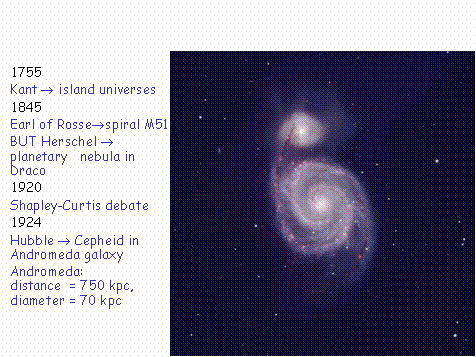
- 1755
- Kant ® island universes
- 1845
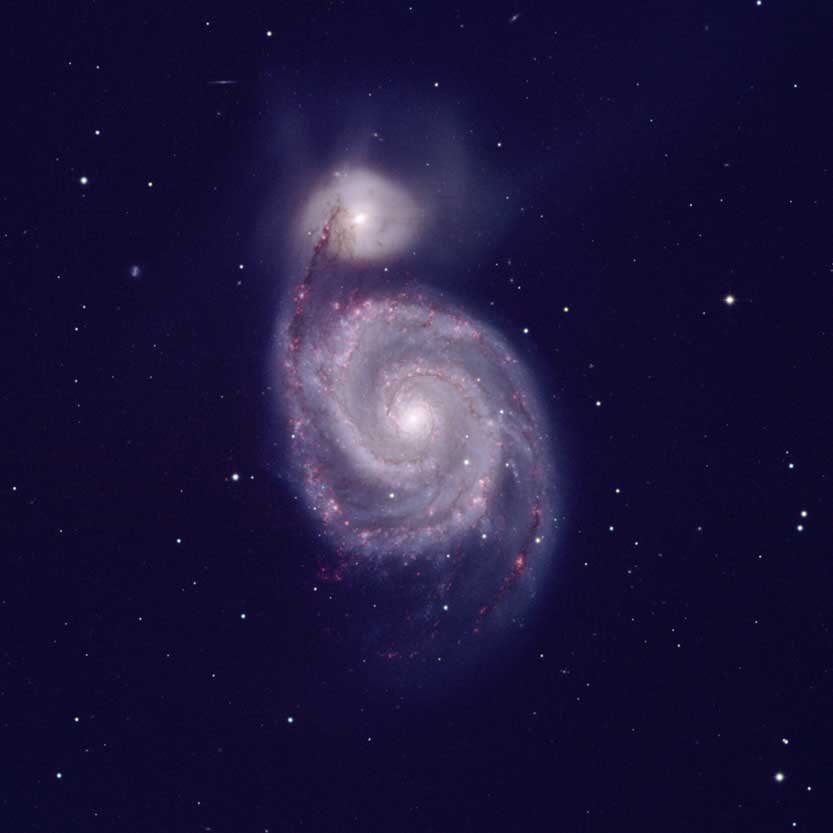
- Earl of Rosse®spiral
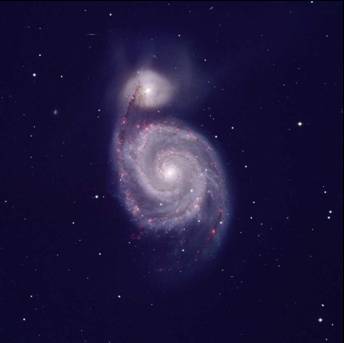
M51
- BUT Herschel ®
planetary nebula in Draco
- 1920
- Shapley-Curtis debate
- 1924
- Hubble ® Cepheid in
Andromeda galaxy
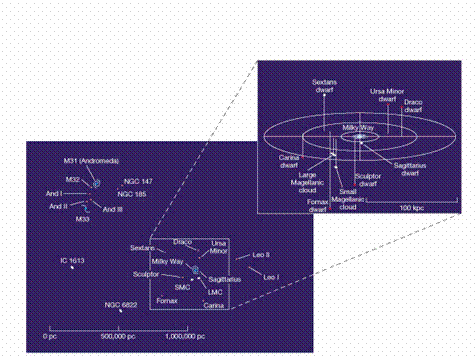
- Andromeda: distance = 750 kpc, diameter = 70 kpc
|
|
11
|
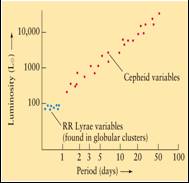
- For pulsating variable stars (CEPHEIDS), observations of period ® luminosity
- Apparent brightness µ
luminosity/(distance)2
- \ Distance
measure - works for 1 kpc to 30 Mpc
|
|
12
|
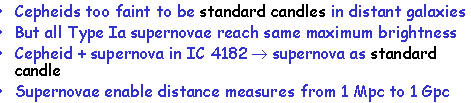
- Cepheids too faint to be standard candles in distant galaxies
- But all Type Ia supernovae reach same maximum brightness
- Cepheid + supernova in IC 4182 ® supernova as standard candle
- Supernovae enable distance measures from 1 Mpc to 1 Gpc
|
|
13
|
|
|
14
|
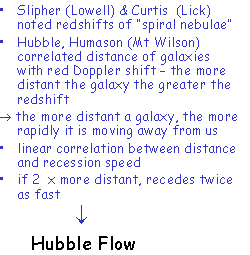
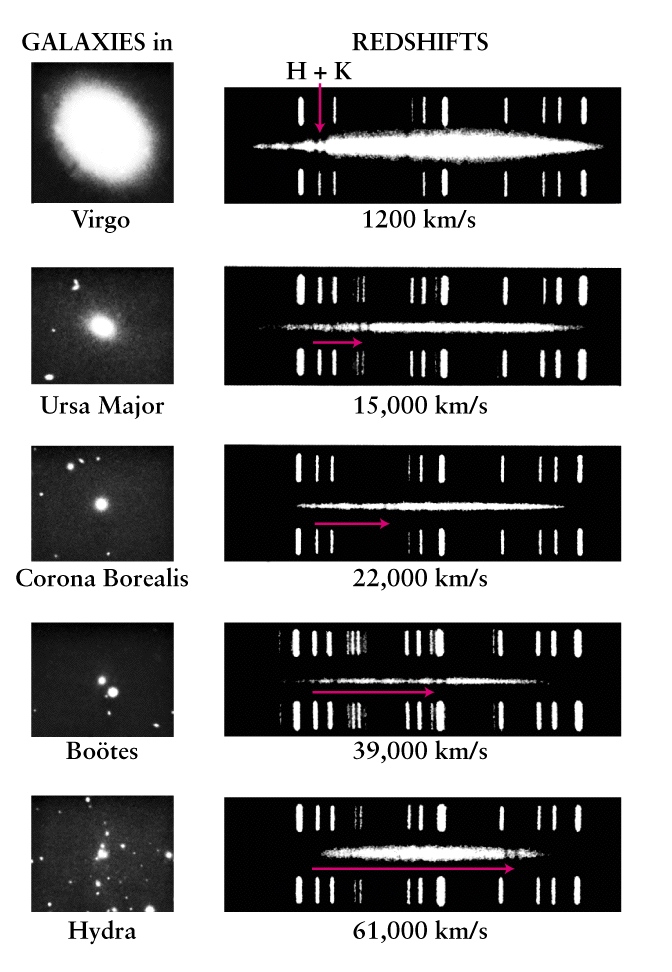
- Slipher (Lowell) & Curtis
(Lick) noted redshifts of “spiral nebulae”
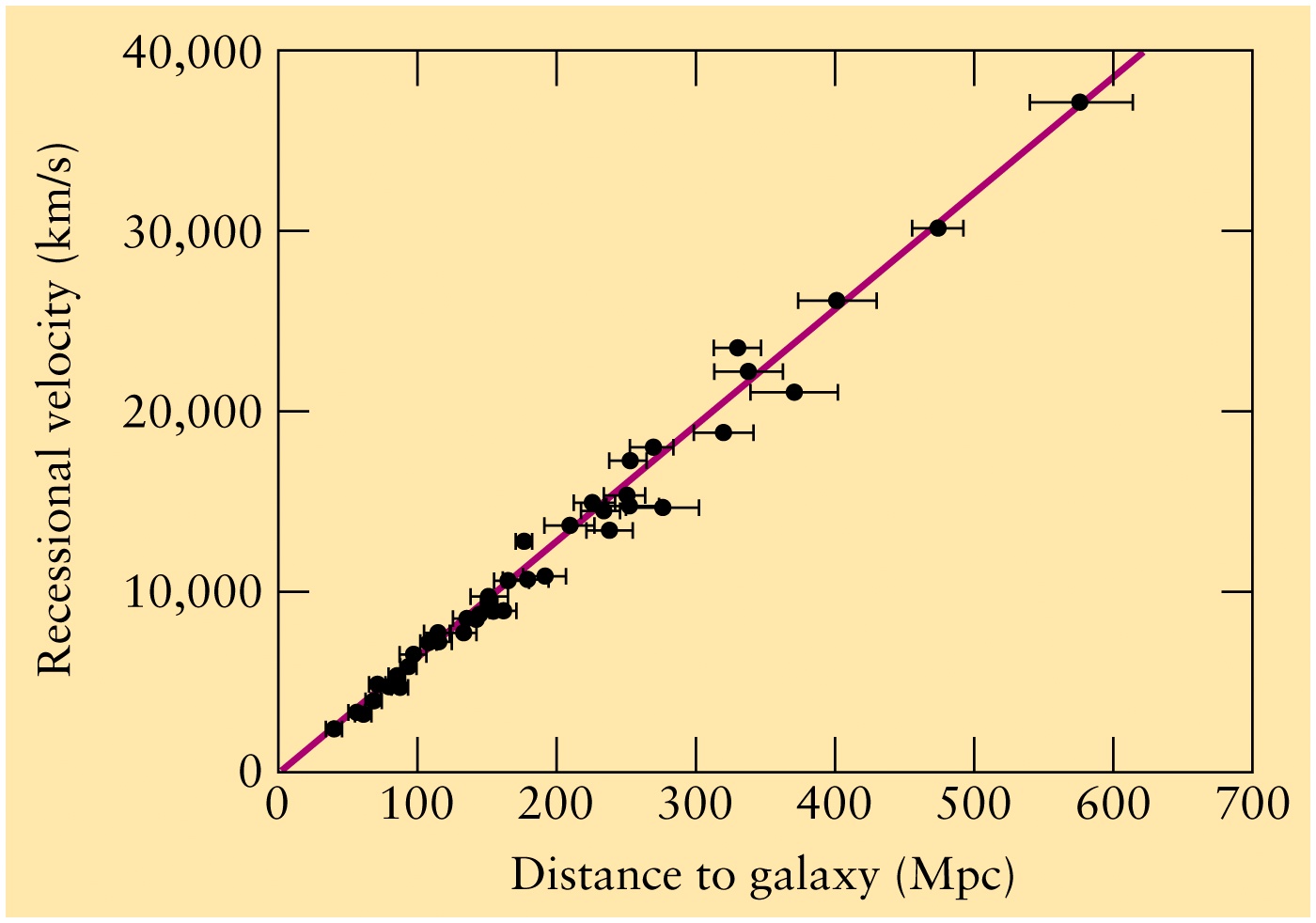
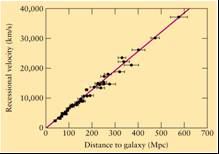
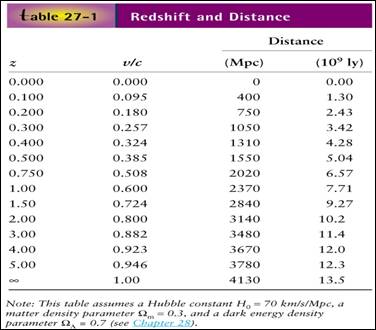
- Hubble, Humason (Mt Wilson) correlated distance of galaxies with red
Doppler shift – the more distant the galaxy the greater the redshift
- ® the more distant a
galaxy, the more rapidly it is moving away from us
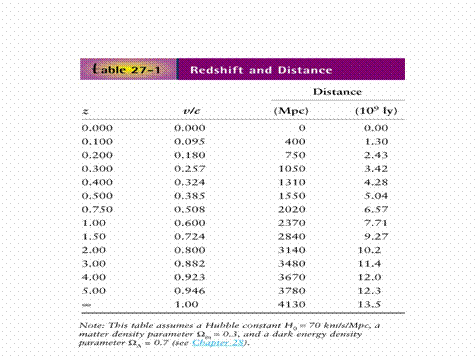
- linear correlation between distance and recession speed
- if 2 x more distant, recedes
twice as fast
- ¯
- Hubble Flow
|
|
15
|
|
|
16
|
|
|
17
|
|
|
18
|
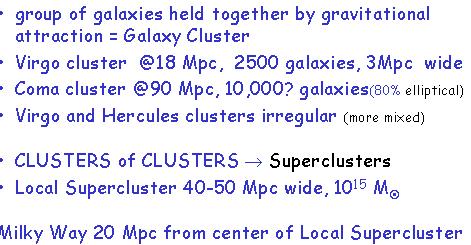
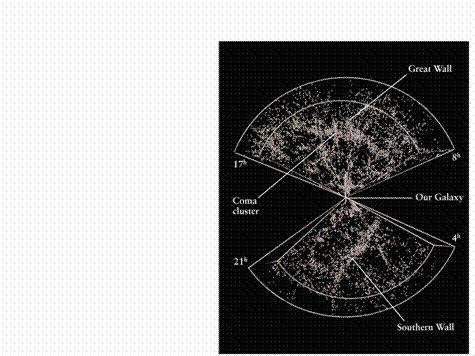
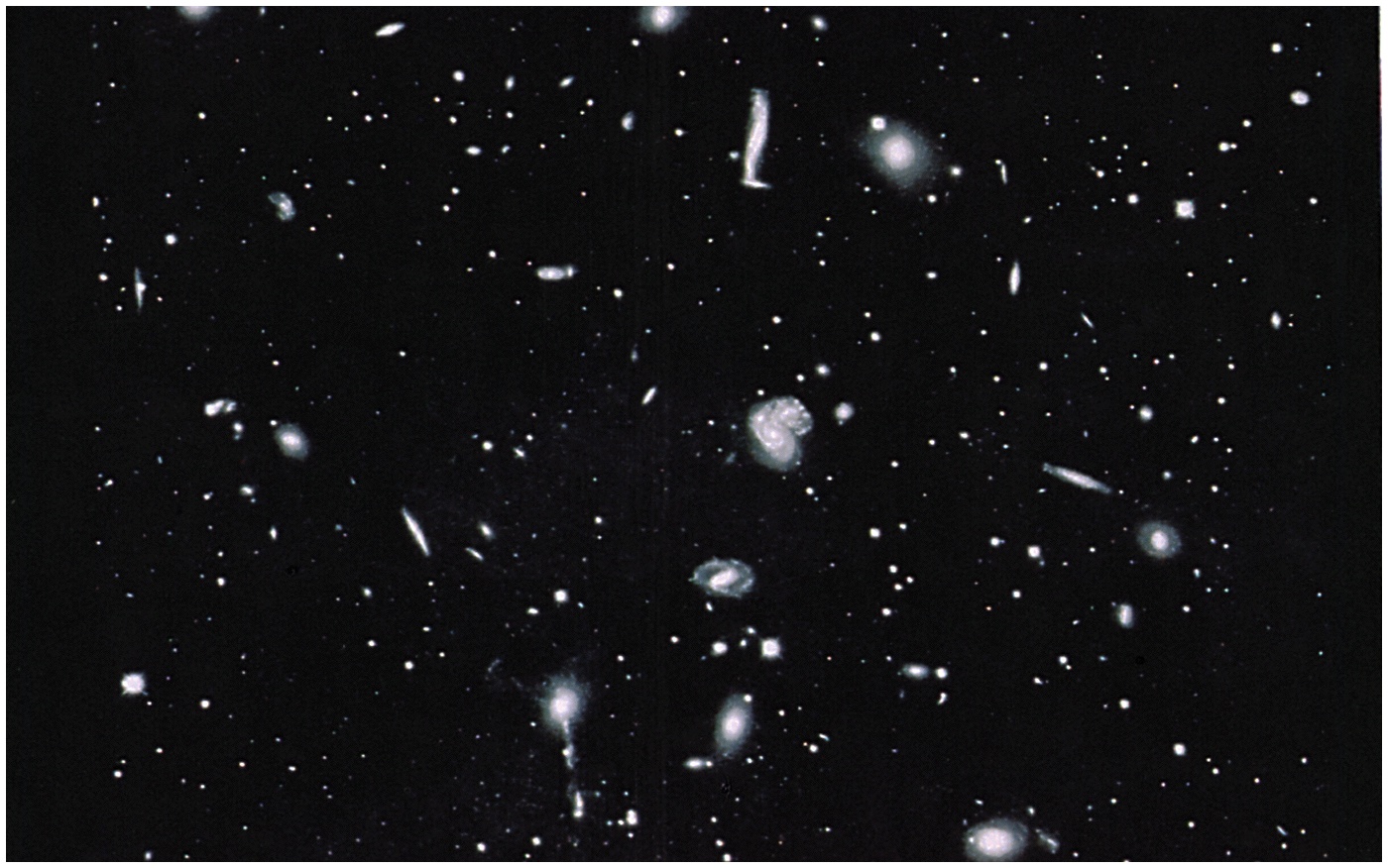
- group of galaxies held together by gravitational attraction = Galaxy
Cluster
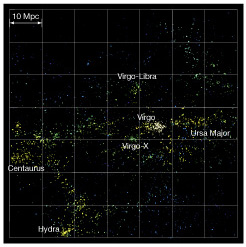
- Virgo cluster @18 Mpc, 2500 galaxies, 3Mpc wide
- Coma cluster @90 Mpc, 10,000? galaxies(80% elliptical)
- Virgo and Hercules clusters irregular (more mixed)
- CLUSTERS of CLUSTERS ®
Superclusters
- Local Supercluster 40-50 Mpc wide, 1015 M¤
- Milky Way 20 Mpc from center of Local
Supercluster
|
|
19
|
|
|
20
|
|
|
21
|
|
|
22
|
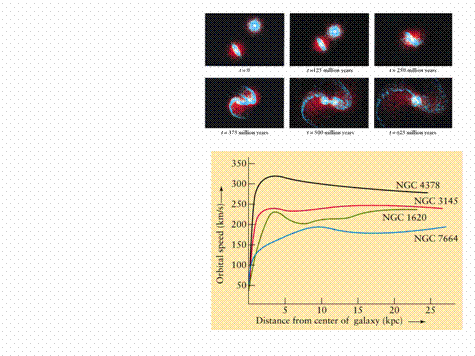
- tidal forces deform; stars hurled into space
- merging takes ~500 million yrs
- Milky Way & Andromeda?
|
|
23
|
|
|
24
|
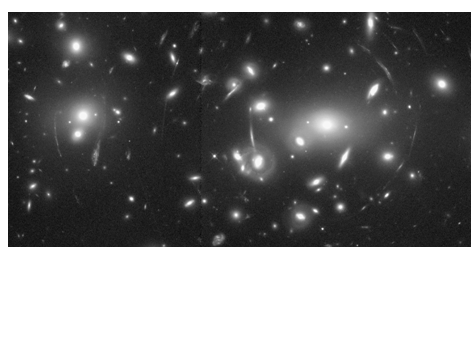
- large velocities for cluster galaxies
- ® mass of visible
matter
- insufficient (x10) to bind clusters gravitationally
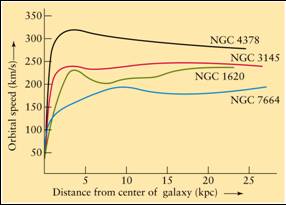
- Milky Way rotation curve ® mass > visible mass
- true for other galaxies
- Dark Matter dominates mass in outer regions
|
|
25
|
|
|
26
|
|
|
27
|
|
|
28
|
|

 Notes
Notes