|
1
|
|
|
2
|
- all planets (terrestrial & Jovian) orbit Sun counterclockwise
- system extends to ~ 10,000 AU (Oort cloud)
- most orbits ~ circular & close to ecliptic plane
- planetary motions follow Kepler’s laws
- 1 AU = 1.5 x 10¹³
cm (or 149,597,870 km)
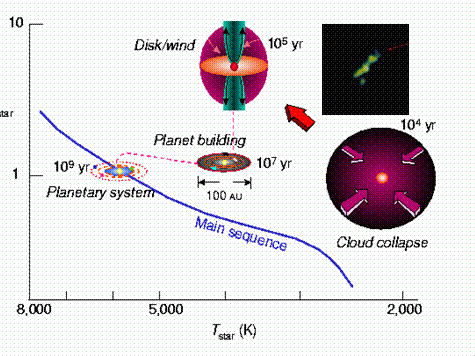
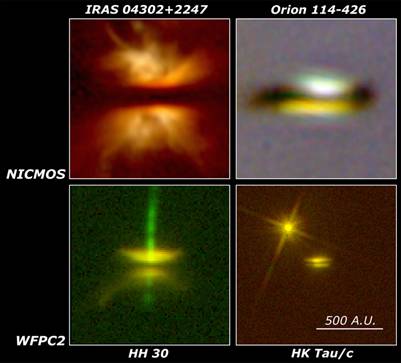
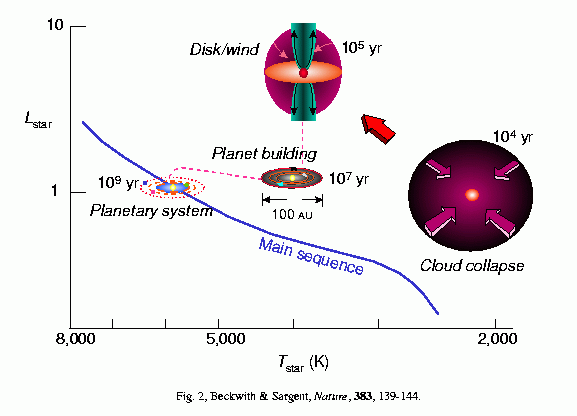
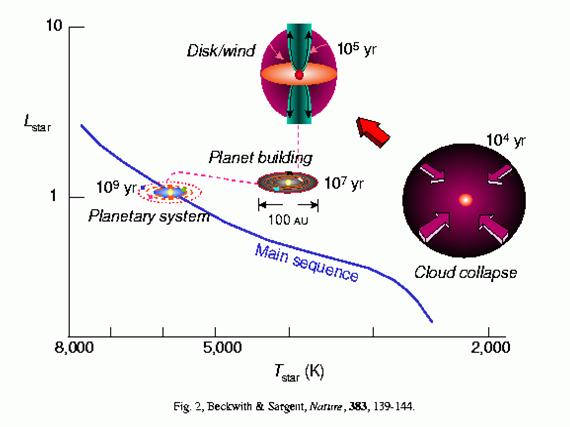
- solar system formed 4.6 Byrs ago in a rotating,
- circumstellar disk of gas and
dust
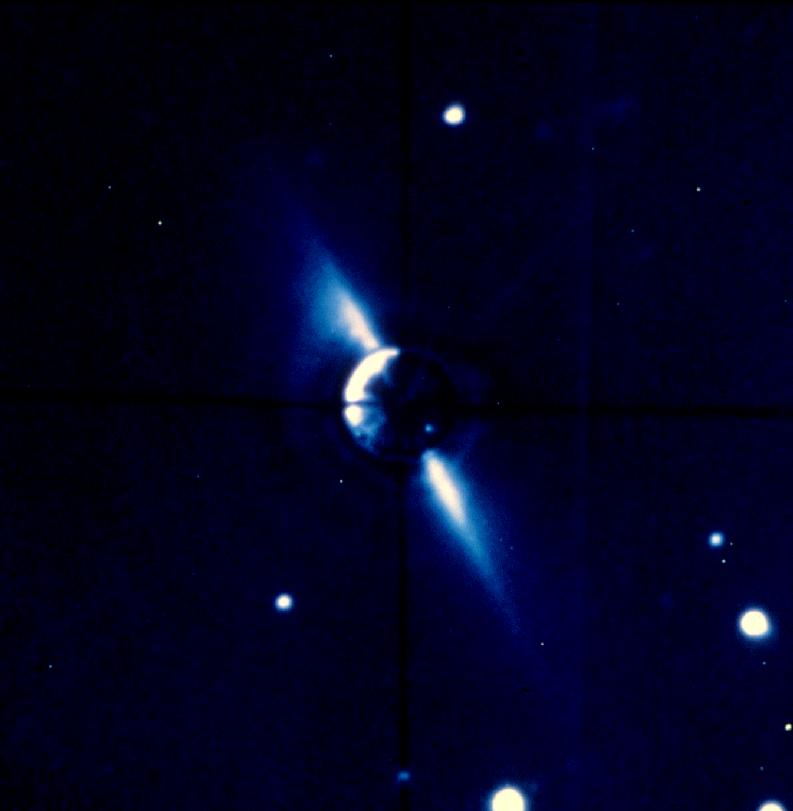
- follow evolution by observing sources at different epochs
|
|
3
|
|
|
4
|
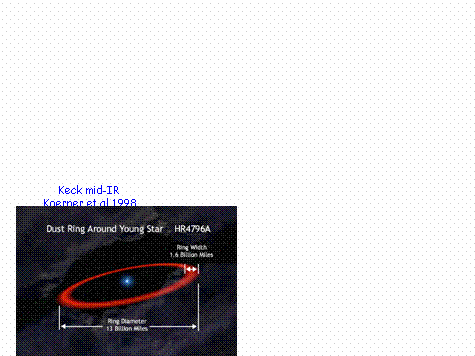
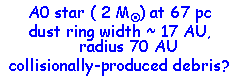
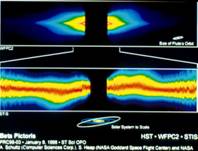
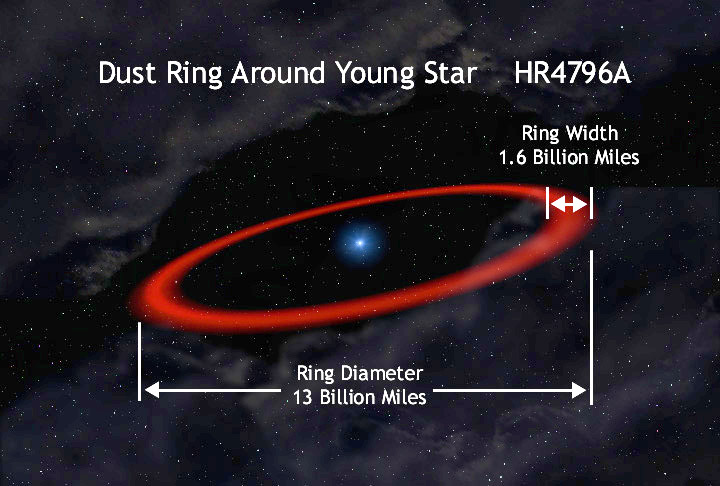
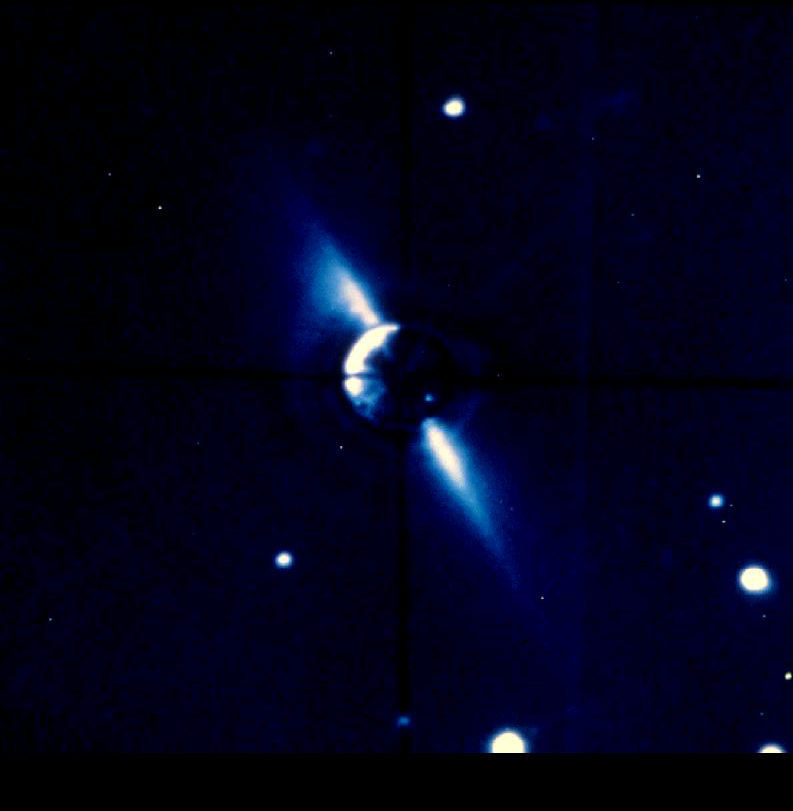
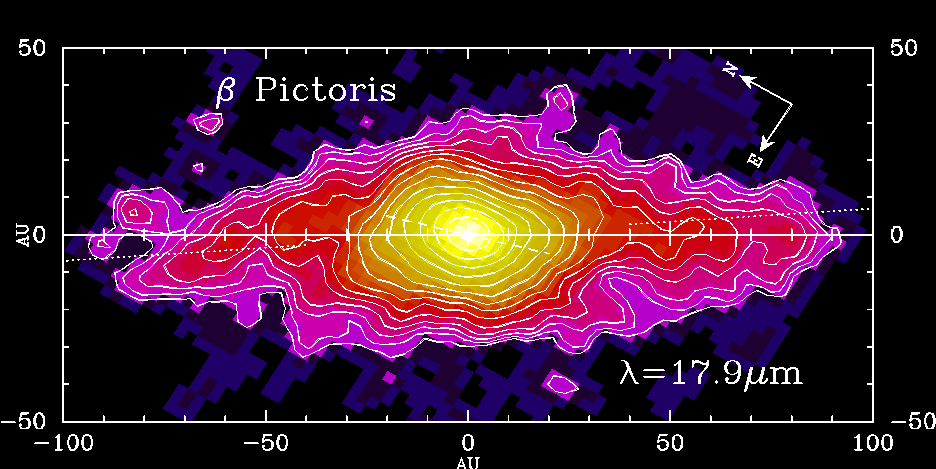
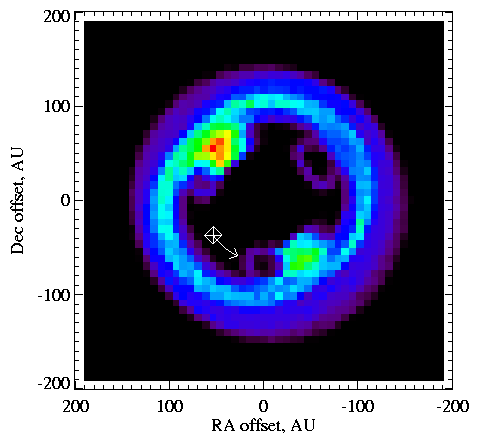
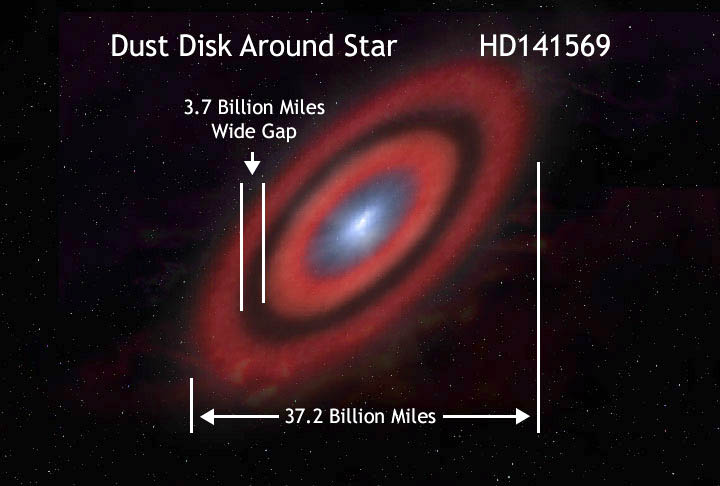
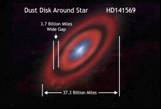
- A0 star ( 2 M¤) at 67 pc
- dust ring width ~ 17 AU, radius 70 AU
- collisionally-produced debris?
|
|
5
|
|
|
6
|
|
|
7
|
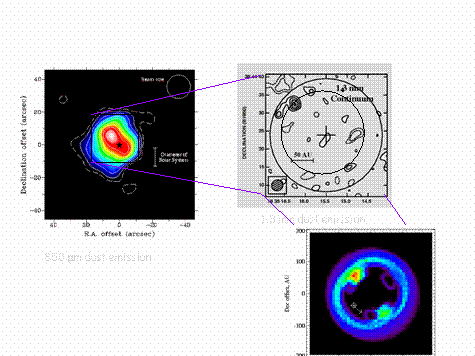
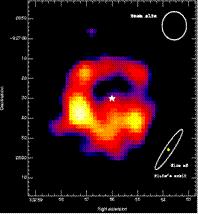
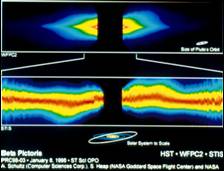
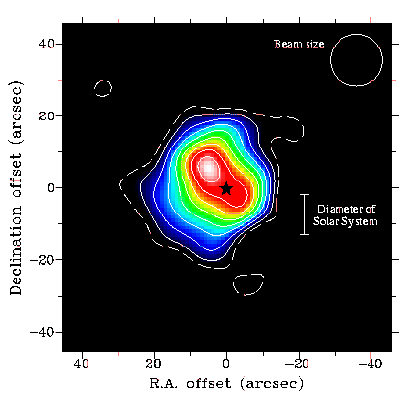
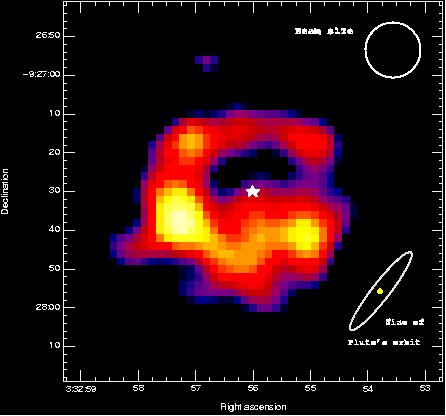
- distance ~ 10 lyrs
- 850 mm dust
emission ® ring, mass ~ 0.2 MÅ
- inner radius 35 AU ~ Neptune’s orbit
- outer radius 75 AU ~
Kuiper Belt
|
|
8
|
|
|
9
|
|
|
10
|
|
|
11
|
|
|
12
|
|
|
13
|
|
|
14
|
|
|
15
|
|
|
16
|
|
|
17
|
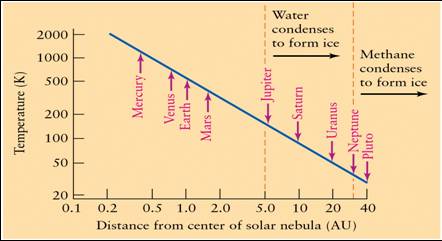
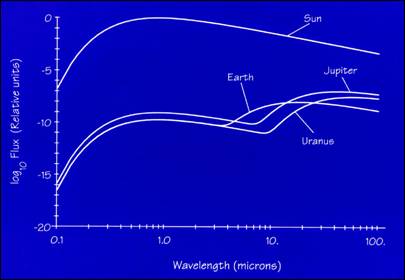
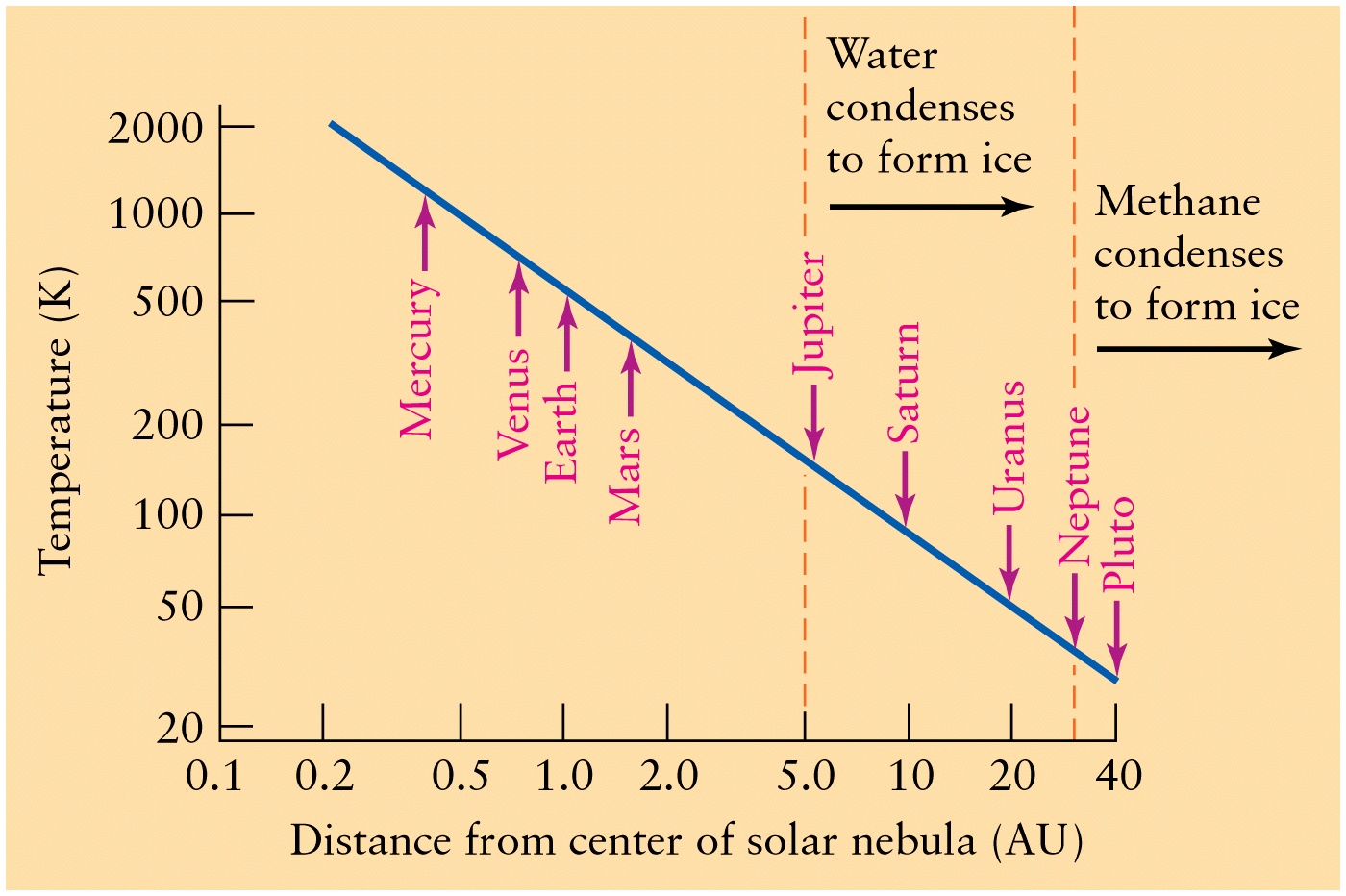
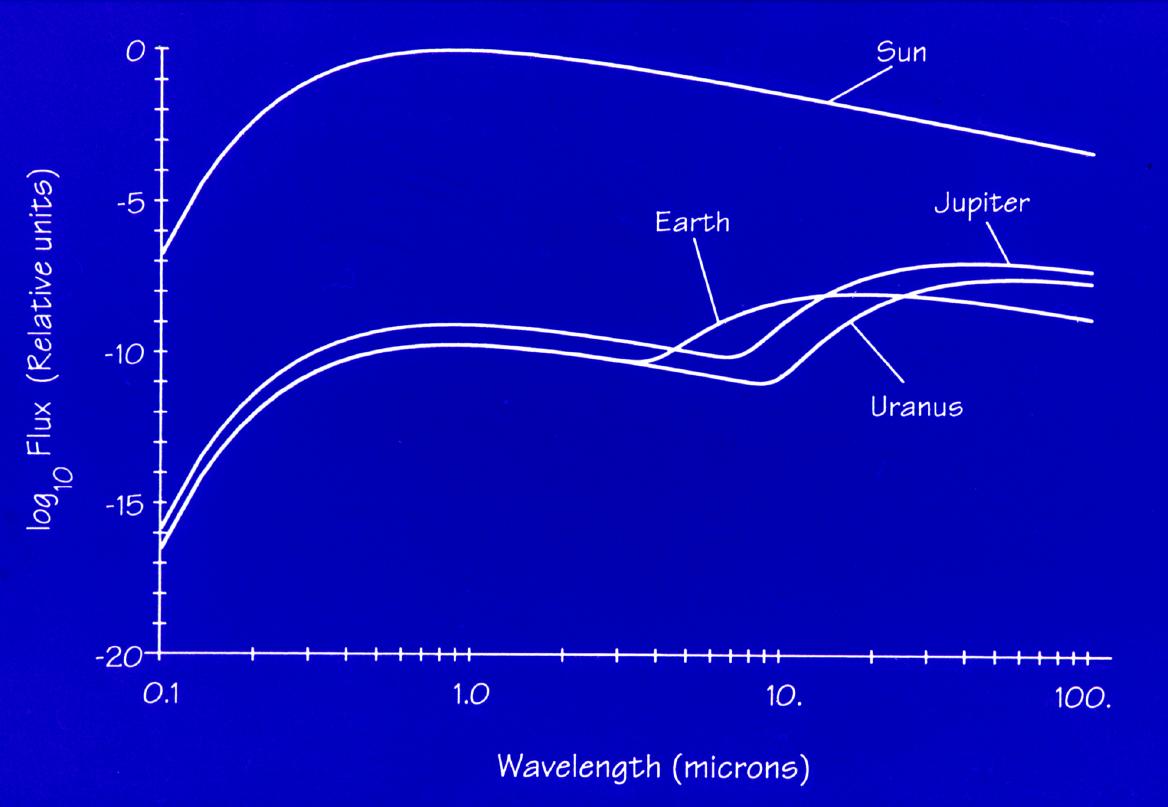
- Energy absorbed = Energy radiated
- (L/(4pd2))pr2 = 4pr2sT4
- T = 278 (L¤/d2AU)1/4 K
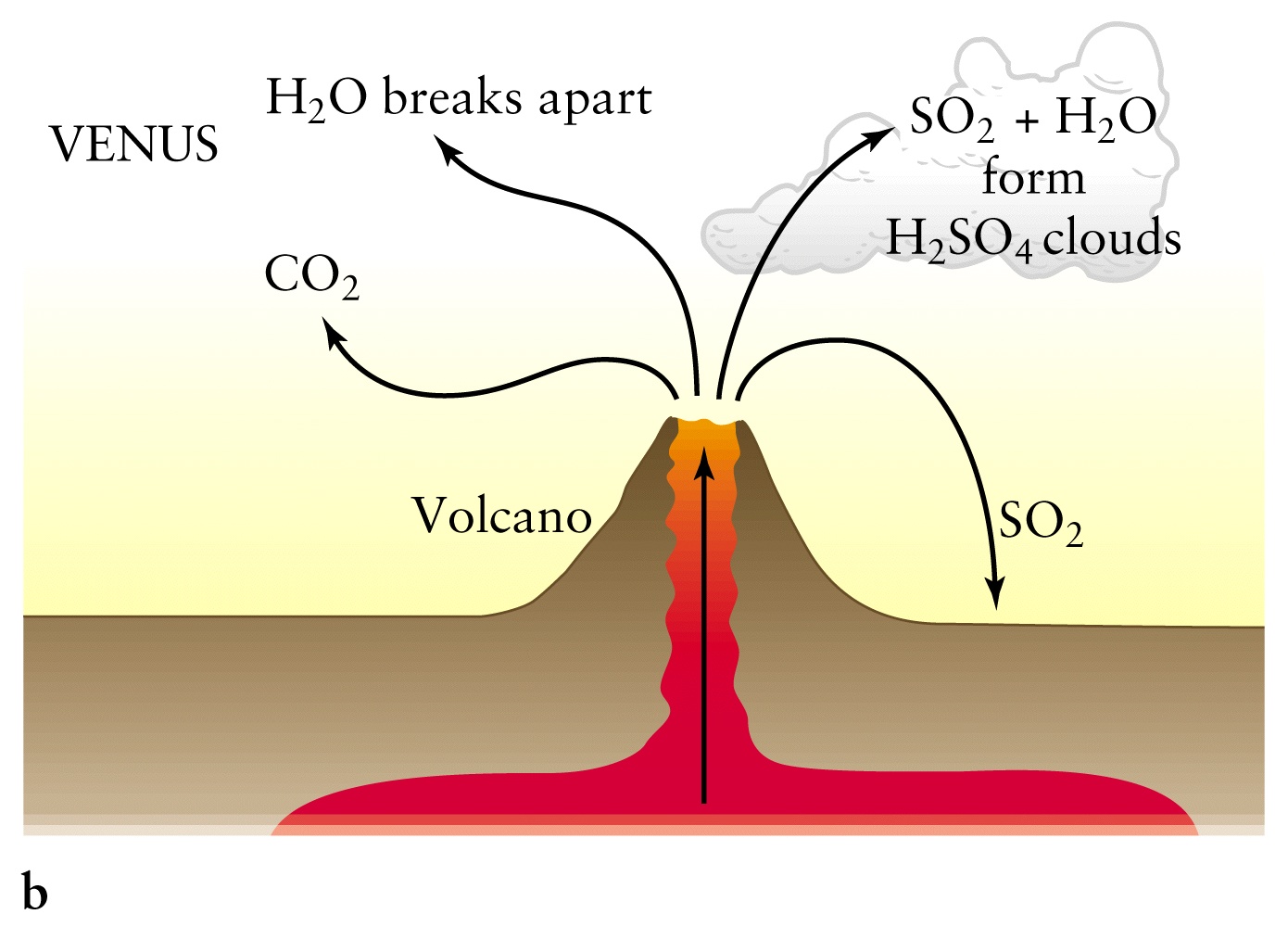
- Greenhouse effect :
- Earth’s atmosphere relatively
transparent to solar radiation
(heating)
- but re-radiation (cooling) in infrared is impeded (photons absorbed by
CO2, H2O)
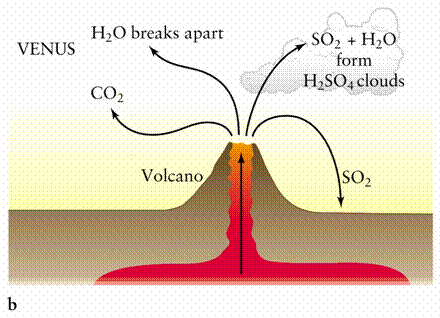
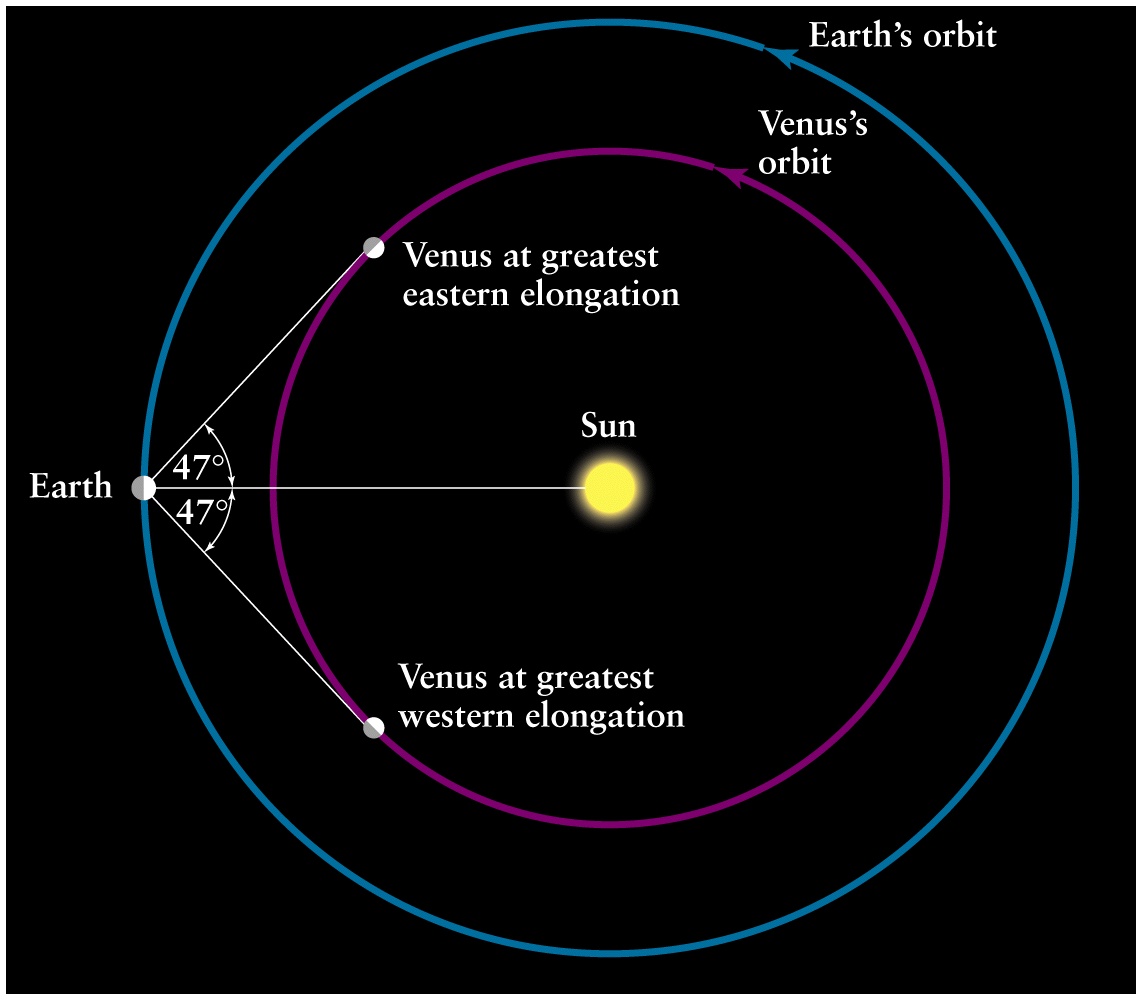
- For Venus, greenhouse effect is enormous
- due to CO2, T = 600K
(could happen at Earth)
|
|
18
|
|
|
19
|
|
|
20
|
|
|
21
|
|
|
22
|
|
|
23
|
|
|
24
|
|
|
25
|
|
|
26
|
|
|
27
|
|
|
28
|
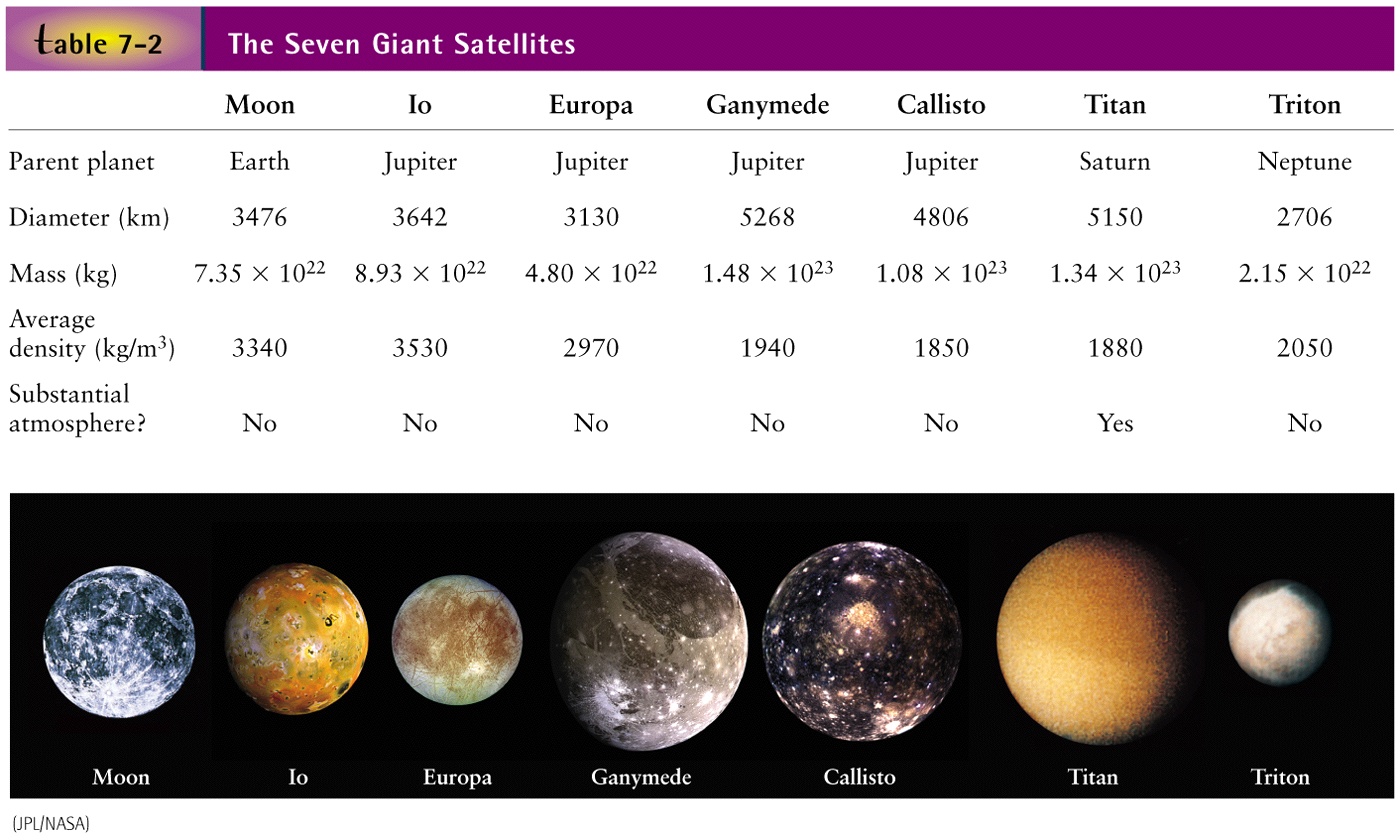
- density 0.69 gm/cc
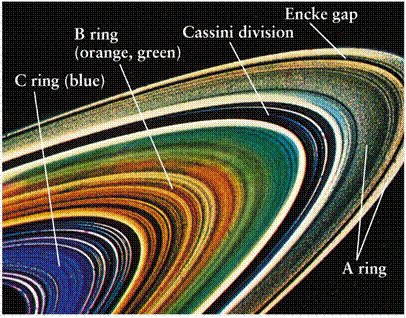
- belt zones like Jupiter but under a methane haze and less visible
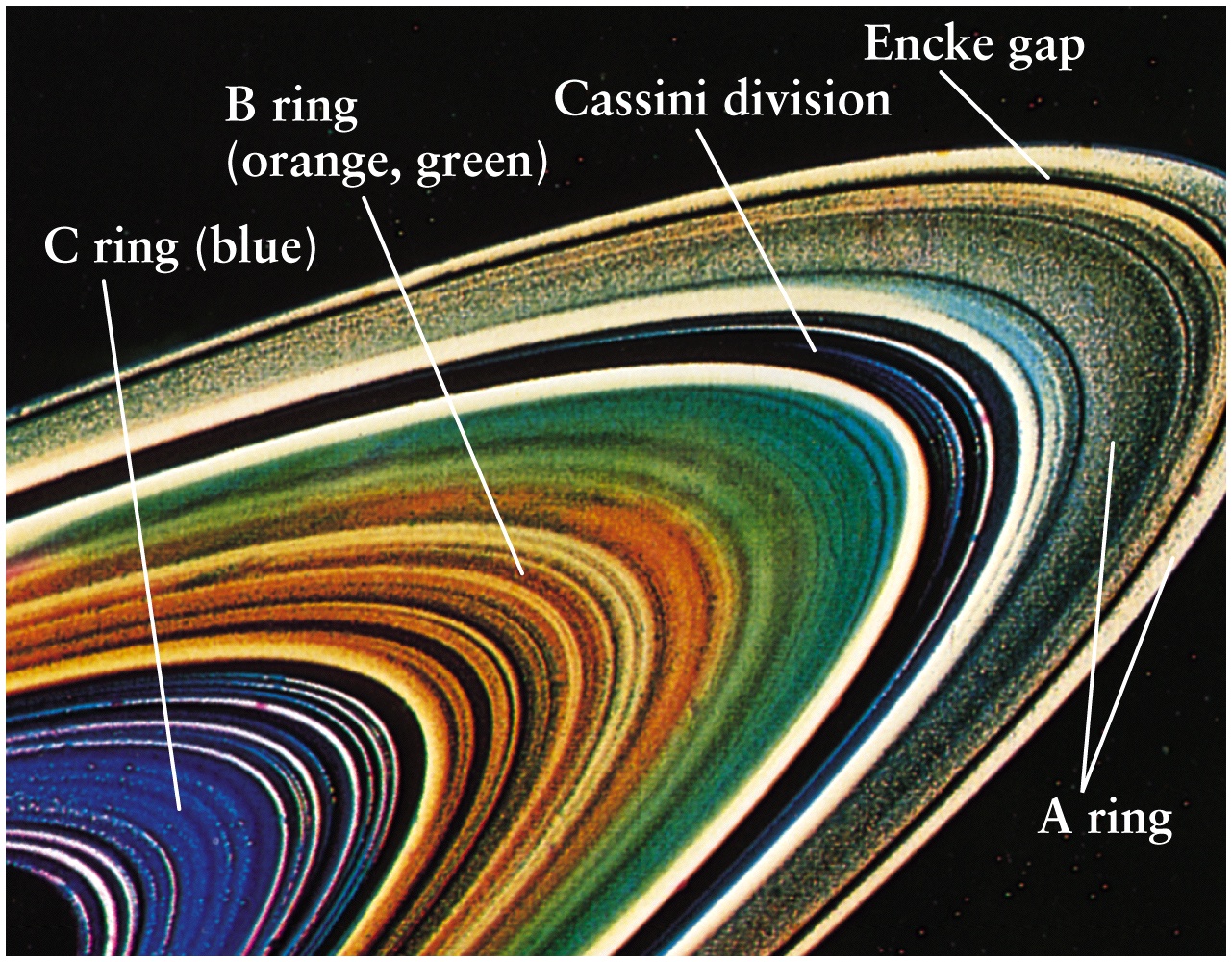
- 24 moons - cause gaps in rings due to gravitational perturbations
- Titan largest ~ Mercury mass
- 1.5 x moon atmosphere; methane and nitrogen smog
- surface cold - ice (179K); reverse greenhouse effect - smog blocks
sunlight
|
|
29
|
|
|
30
|
|
|
31
|
|
|
32
|
|

 Notes
Notes